Michelle Soper / February 7, 2023

How does Less-Than-Truckload work?

Let’s face it – shipping is getting expensive at the same time as consumer pressure is rising for it to be free. Your business needs the right solutions to balance your profits and losses – and without careful optimization, shipping could be one of your biggest pain points.  

In this article, we’re looking at one of the solutions that is increasing in popularity for freight 150lbs and over – Less-Than-Truckload (LTL). 

What is LTL? 

When shipping ground domestic in North America, you essentially have three options: 

  • Small package/parcel shipping (SPS) 
  • Less-Than-Truckload (LTL) 
  • Full Truckload (FTL) 

For goods under 150lbs, you are likely using SPS services, most commonly offered by providers like UPS or Fedex. FTL is for a shipment of goods that use the space of an entire truck-trailer. LTL is the balance in between; it’s a solution for goods between 150-15,000lbs, that do not take up the space for an FTL shipment to be necessary.

How does it work? 

Rather than paying per parcel, like in SPS, or for the full truck, like in FTL, the shipper in LTL shipments pays for the space its goods take up on the truck. The rest of the cost of the truck trailer is divided among shippers paying to have their goods transported. LTL operates on a ‘hub and spoke model’ where local terminals are the spokes and larger central terminals are the hubs or distribution centers.   

 Rates are typically dependent on several factors: 

  • Location and distance of shipment. 
  • Type of goods; perishable, hazardous, or fragile materials are likely to cost more.  
  • Dimensions of goods, particularly the weight.  
  • Whether or not the shipment needs to be expedited. 

Why choose LTL? 

There are several benefits of choosing LTL as a solution. These include: 

  • Cost reduction – rather than paying for an unoptimized FTL load, LTL allows you to split the cost of freight, and lower your overall warehousing expenses.  
  • Increased security for your goods – since most LTL shipments are tightly packaged onto pallets before being loaded, they are often more secure in the shipping process than when using other methods.  
  • Environmental considerations – optimizing a truckload among many shippers is less wasteful than several separate shipments.  
  • Faster delivery times – instead of waiting for a full truckload to send out shipments, you can ship goods to customers much faster, improving their experience.  

Likewise, some providers offer additional perks for LTL customers, such as inside pickup and delivery, advanced tracking, and dedicated support and expertise from the LTL provider.  

In conclusion… 

If your business regularly ships goods, and those goods weigh over 150lbs, you might be overspending if you don’t have an LTL solution implemented. If you’re only using FTL, and either waiting until you have a full truckload, or sending shipments in underutilized trailers, you’re wasting money.  

Michelle Soper / January 26, 2023

Cut Costs or Cut Staff?

In the summer of 2022, economists debated whether the U.S. economy was officially in recession, and the argument boiled down to semantics. Regardless of the literal definition, the US Federal Reserve and the Bank of Canada, along with other central banks from around the world, have been increasing interest rates with the goal of controlling inflation. Consequentially, many businesses in North America are preparing themselves for the worst.

For many of them, that means cutting jobs. In fact, reducing full-time equivalent (FTE) is often the first step a business takes to reduce operating costs. But FTE reductions also reduce operational capacity, among other unintended consequences. So how can you minimize costs and optimize your bottom line while keeping all your employees on the payroll and your profit opportunities on track?

An analysis of a businesses third-party expenses represents an opportunity for significant savings. Simply put, most businesses are overpaying for their vital business services. These are services such as their telecommunications, credit card processing, waste removal and more – services their business needs to function.

One of the major underlying issues contributing to cutting personnel in the event of economic struggle is that most companies don’t understand the full breadth of their business expenses. By conducting a targeted optimization of these costs, a business can directly improve profits and avoid the consequences of layoffs.

These savings can come from several different methods – direct negotiations with incumbent providers, consolidation of services, recovery of billing errors, vendor switches and more. Importantly, these cost reductions apply directly to the bottom line, making a dollar saved even more impactful than a dollar earned through sales.

Opportunities to cut costs exist across all businesses, but one of the main difficulties is in knowing where to look and what expenses can be reduced without sacrificing level of service. Most of their expenses are much more complicated than they appear.

Most companies simply do not have the time nor specific tools to pursue significant savings in these areas. Optimizing business expenses can cost hundreds of hours spent analyzing, negotiating and waiting on hold, and even then can fall short. In these cases, where a business lacks the resources to create a team specifically to reduce costs, they can turn to Schooley Mitchell. Schooley Mitchell utilizes networks of cost reduction specialists leveraging software, pricing databases and long-standing influence with service providers to find savings for their clients.

While layoffs often seem like a simple solution to immediate economic concern, they can cause morale issues with current employees, reduce operational capacity, and cause damage in the long term when it’s time to ramp up for recovery. By making cost-cutting a priority, your business can create a more sustainable bottom line, build resiliency to economic downturn, and avoid headcount-based speedbumps on the road to recovery.

Download the PDF

Michelle Soper / January 19, 2023

Community Involvement – Rotary Club of Akron

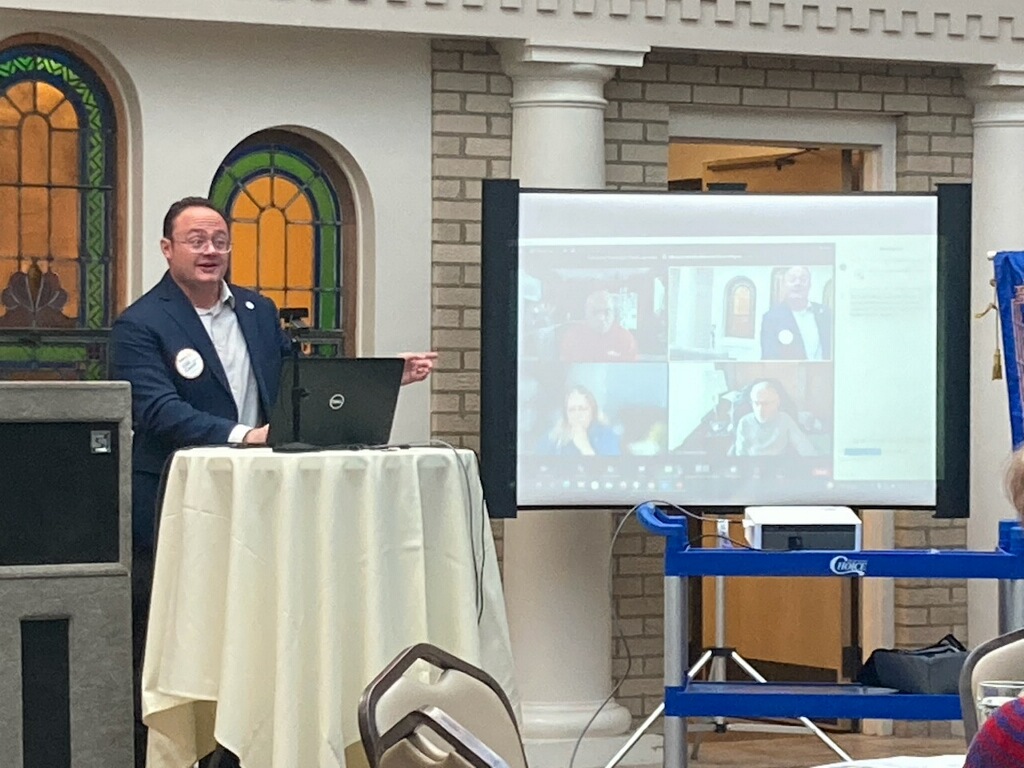
Schooley Mitchell Strategic-Partner Fred Carter recently had the pleasure of presenting to one of the largest Rotary Clubs in his area, the Rotary Club of Akron. He gave a talk about his background and dedication to service, as well as how Schooley Mitchell can help the business owners in the room increase their profitability and how that, in turn, would increase the funds the club would have available through consistent referral appreciation donations.

Michelle Soper / January 19, 2023

New Partnership with CEOAccel

Schooley Mitchell of Chandler is very excited to announce a partnership with CEOAccel.

CEOAccel™ is a new invitation-only virtual community for CEOs of $1M+ revenue companies founded and led by Christine Rose. It offers virtual network building, a virtual learning platform, business/executive/team coaching, mastermind groups, and other benefits to support CEOs as they address business opportunities and challenges, accelerating positive outcomes leading to faster growing, higher value companies.

Schooley Mitchell’s cost reduction services will be a money saving, profit enhancing Partner Benefit for CEOAccel members.

Michelle Soper / January 11, 2023

Check out Longchamps

demambro-logo-longchamps-electric

If you need an electrical contracting partner you can count on, contact Longchamps today. It offers a wide range of solutions to handle any situation, all backed by an experienced team dedicated to providing the highest level of service.

Michelle Soper / December 12, 2022

Cost reduction is the strongest weapon in your business’ fight against inflation

Any business owner knows that this decade has been rough. From shutdowns and restrictions, to inflation and staffing shortages, and the looming threat of recession around every corner, it’s understandable that many business owners and managers are scrambling to keep their operations afloat.

I see this in my personal life as well as my professional one. A gym I belong to has been reducing its services and cutting staff as a result of pandemic hang-over and other macroeconomic challenges. While this obviously changes the gym experience, even more, it makes me think of the consequences of these actions, compared to the alternatives not taken.

In particular, this comes to mind when I see businesses compromising their services and staffing, compared to practicing more proactive cost reduction.

The dangers of losing staff.

While we are experiencing record staffing shortages in North America, and that’s not always something your business can prevent. Widespread layoffs should not be your first cost-cutting measure. Especially if your business, like many others, is already in the position of having to raise prices due to inflation.

Cutting staff and working below your optimal staffing level can have significant negative impacts on your business. These include:

  • Higher likelihood of paying overtime
  • Employee burnout
  • Increased mistakes and accidents
  • Decreased quality of service and productivity
  • Lower team morale
  • Higher turnover rates

You might think cutting staff is saving money, but it’s likely to cost more in the long run.

Why understaff when you might already be overpaying?

Thinking back to my gym, cutting staff and reducing services – all the while risking its customer retention –I wonder if they’ve taken a look at other expenses, instead.
My business, Schooley Mitchell, helps businesses and other organizations reduce operational expenses across thirteen categories, including telecommunications, merchant services, fuel, waste disposal, and shipping. We do this all by leveraging proprietary software, best-in-class pricing databases and long-standing relationships with service providers to find savings, and monitoring accounts on an ongoing basis so they remain optimized. All this to say, we implement savings without disrupting or reducing services.

If we look at waste expenses alone, Schooley Mitchell helps save recreational businesses, including gyms, an average of 40% on their waste disposal fees. Think about your yearly waste disposal spend and cut that by 40% – that could go a long way in preventing you from being understaffed or having to cut quality.

It’s not just gyms…

No matter what the industry, businesses should be looking to proactive cost reduction solutions before cutting staff and services.

For example, we recently helped implement payment processing savings of $47,500 per quarter for a maintenance business. Depending on your business, those kinds of savings could more than cover an employee’s wages, with money left over to improve services instead of reducing them.

The truth is that many businesses don’t know whether or not they’re paying competitive rates on their essential services. Given our experience – over twenty years and 27,000 clients to date – we have the knowledge, resources, and clout with vendors to ensure you’re paying fair prices, and not a penny more.

Contact me for a risk-free, no-obligation expense audit.

Cutting staff and reducing services should be a last resort, not the first tool you reach for.

To learn more about your business can save an average of 28% on its essential services, at no cost to your business, reach out to me at [email protected].