Check out Bucky Plastic Surgery

If you’re considering cosmetic surgery, reach out to Bucky Plastic Surgery today! It has highly qualified surgeons who will go above and beyond to help you get the results you want in order to look and feel your best.
If you’re considering cosmetic surgery, reach out to Bucky Plastic Surgery today! It has highly qualified surgeons who will go above and beyond to help you get the results you want in order to look and feel your best.

In the market for new furniture? Look no further than Jarons Furniture Outlet. With its quality pieces, competitive prices, and outstanding service, you can’t go wrong!

The following article was shared by EBN on October 11th, 2022:
 In recent years, creating supportive environments and robust benefit packages for employees became table stakes. As the economy falters, employers are looking for new solutions to financial stability — but those solutions can’t come at the cost of employee loyalty.
According to Principal Financial’s 2022 Well-Being Index, 65% of businesses surveyed anticipate a recession in the next six months, and 63% report having already been negatively impacted by inflation. And yet, more employers have turned to increasing prices (64%) and reducing operating expenses (62%) than have reduced or stopped hiring (42%). In fact, 55% of businesses said they will not reduce salaries if hit with a recession, and 47% said they will not reduce benefits.
“Organizations have fought so hard for every hire, and employee loyalty is incredibly important right now — and probably always should have been,” says Amy Friedrich, president of U.S. insurance solutions at Principal. “Instead, they’re looking at other ways to cut costs.”
In her role, Friedrich is primarily focused on insurance solutions for small and mid-size operations, and is also responsible for Principal’s 1,200 affiliated financial professionals. As financial wellness has become of increased importance for both organizations and their workforce, she’s working to help businesses embrace income protection products, while building flexible benefit plans that provide vital support to employees in need.
Friedrich recently spoke with EBN about shifts in the market, boosting education and understanding of benefits for small- and mid-size business owners, and why a back-to-basics approach to benefits is helping organizations find stability in times of stress.
It’s a little bit of a back-to-basics story. Everybody wanted to talk to me about dental and vision and those buzzier benefits — and I get it, those are interesting to talk about. What the pandemic really brought into sharp focus for these business owners is the need for a group life policy or even a short-term disability policy. If you hadn’t done the basics with some of your life and disability coverages, your employees were really exposed. People want to offer their employees some kind of income protection if they have to be away from work, or something that would provide coverage in the scenario of the death of an employee. Going back to basics isn’t always an incredibly exciting story, but it’s a pretty profound shift, at least in the small and mid-size market.
I think it’s half and half. I had a conversation with a business owner recently who said they couldn’t live with themselves if they weren’t providing the basics — they’d rather take changes to their own salary first. But at the same time, the conversation has changed and employees are more frank than they used to be. Some would say they’re more demanding, but they’re just being clearer about what they hope for and expect from an employer: to feel safe at work and like their income is going to be protected, and that they’ll have something for their family to fall back on if something happens to them.
We start by looking at what we can afford in year one or year two. Employers always guess the cost of these things way too high, to the magnitude of three to five to seven to 10 times more than they’re actually going to pay. So when they’re talking about putting a disability benefit in place, which might actually cost $200 to $300 an employee, their guesses are in the $2,000 range. There’s still a fundamental gap going on when it comes to the cost of benefits. But the marketplace has gotten more efficient, and has more plan-design flexibility than it used to. And when you use that plan-design flexibility to get basic coverages in place, things like income security and protection products can get people to a place where their stress diminishes over time.
The businesses we work with are very aware of inflation, they believe a recession is coming and they’re worried. But we asked those businesses what actions they will not take in a recession, and their top choices were really interesting. They said they would not reduce salaries. And they said they would not reduce benefits offered. Historically, whether you were a large or small business, those are often the first places companies go to reduce budgets, trimming benefits or laying off staff or reducing salaries.
It’s appropriate to have a little caution there, because if things continue for six months beyond where we are, nine months, 12 months, there will be a point when small and mid-size employers will have to start going after some of these things to change them. But I can tell you, it’s near the bottom of their list in terms of things they want to impact.
You’ve heard the discussion that this is sort of the strangest pseudo-recession we’ve ever seen there, and one of the reasons there isn’t as much firm agreement on some of the recessionary metrics is because wages and job growth have held up so firmly. My guess is that, at least through the summer, small businesses — which make up a good part of the GDP — were holding up some of those wages and job numbers, steady to upward.
For small employers, they really have — almost to their detriment — taken care of their employees. When we look at burnout compared to a year ago, employees are feeling more stress for sure, but about 40% of them would say that. When you ask employers, compared to a year ago, nearly 61% say they’re feeling more stressed. So business owners need to take care of themselves too, and make sure they’ve done the right things for business continuity.
We’ve focused so much on the structure of benefits and PTO and space to manage child care and elder care for employees, but we need to also be giving employers great advice and guidance on taking care of themselves. And beyond their personal health and wellness, the health of their business: have they revisited their business plan? Have they done the right succession planning? Do they have an informal understanding of the valuation of their business? Some small employers have given those basics up in the past year or two, but it’s another back-to-basics concept that we need to get back to.
The following article was shared by Gartner on August 17th, 2022:
Contributor: Jackie Wiles
Many executive leaders will need to make trade-offs in their spending to tackle today’s triple squeeze of persistent inflation, supply chain disruptions and a tight labor market. But common missteps in cost reduction can undermine even structured programs designed to optimize cost decisions strategically.
“Many more CFOs will start to look for cost reductions if high inflation persists or if there is a risk that higher interest rates will weaken the demand-side of the economy,” says Randeep Rathindran, Vice President, Research, at Gartner. “Executives should scope now where to secure cost reductions while avoiding seven common mistakes that make it difficult — and potentially impossible — to pursue growth ambitions in the longer term.”
Fewer than half (43%) of leaders actually achieve the level of savings they set out to in the first year of cost reduction. Unrealistic targets are the problem.
Across-the-board cuts penalize the more efficient parts of your organization (demotivating those teams) and can result in eroding important sources of value.
Only 11% of organizations can sustain cost cuts over a three-year period. This is because most cost-cutting strategies are short term and fail to preserve the behavioral change required for smart spending decisions in the future.
Although some costs (such as travel and expense) can be capped by policy rules and restrictions, many removed costs inevitably creep back in as budget owners and managers pursue spending and initiatives in the name of supporting growth. The result is another painful round of cost reductions when the next crisis hits.
Only 6% of organizations consistently invest in growth opportunities without creating excessive complexity. Because of the premium many organizations and their investors place on top-line growth, executive leaders tend to have a blindspot when it comes to complexity.
Complexity drives almost half of the growth in corporate overhead costs. From introducing too many incremental variants of existing products to investing in scope-additive business lines or elaborate management hierarchies, complexity creates:
Direct costs, such as excessive inventory holding or warranty costs from supporting too many product varieties and SKUs
Indirect costs in terms of slower decision making
Only 9% of organizations create enough capacity to take on the growth and innovation opportunities they pursue. Aggressive cost reductions can drain resources from high-impact innovation projects or indefinitely delay funding to a point where competitors can hurdle your organization in the market.They can also promote an environment where innovators don’t feel permissioned to request enough multiyear funding required to ensure their initiatives are successful.
Among CFOs polled in July 2022, 66% said they planned to increase investment in digital technology in the ensuing 12 months, and another 32% said they would maintain such spending. That’s the highest percentage of any spend category, reflecting the ongoing need to prioritize digital acceleration as a way to:
Permanently reduce the cost of doing business (especially to fight inflation)
Improve customer and employee experience
Outperform competitors during the looming downturn
However, realizing value and scale from IT initiatives requires an actionable digital-investment model and a clear understanding of enterprise digital strategy. A productive CFO-CIO partnership is also critical to ensure funding continues to flow to critical digital initiatives.
Two in five IT leaders regret technology purchases due to unfavorable terms or overpriced fees. It is imperative for an organization to acquire the right set of technologies to support its digital transformation or speed up business processes. However, limited budgets, coupled with pressure to invest in new and disruptive technologies, can drive leaders to invest in technologies that require unforseen implementation costs, generate new inefficiencies and generally fail to meet expectations, wasting potentially millions in economic resources.
Vendor negotiations are a key part of cost optimization strategies, and today’s high levels of inflation make it even harder to tell if your vendors are tying price increases to their costs or are simply trying to maintain their margins. Make sure to negotiate not just prices but terms and conditions.
Under budget pressure, executives typically look first to lower costs in their direct area of responsibility, such as their function, but it’s critical to consider, too, whether those cost-reduction actions would create or exacerbate risks that threaten the organization’s value proposition.
Examples:
This article has been updated since its original publication in December 2020 to reflect new events, conditions and research.
Randeep Rathindran, VP and Team Leader, has a primary research focus on the Chief Financial Officer and FP&A leader role, Financial Data and Analytics, Investor Relations, and Finance Technology Optimization key initiatives.

 According to the Wall Street Journal, “Companies are taking steps to cut costs and improve efficiency after many of them relied more on boosting prices in recent quarters to offset inflation and bolster their bottom lines.”
You can read more of of what they have to say, here.
Schooley Mitchell helps businesses reduce operational expenses and grow their bottom lines, keeping them strong even in the midst of economic hardships.

 According to Forbes, “Typically as we enter recessions, companies look to quickly cut costs; that translates into laying people off and cutting back on hiring. Whereas your company may do that as a whole, CIOs and CTOs should be very thoughtful before they do that in their engineering and IT organizations because there likely will be continued demand for these services. We are still in a constrained labor market, so once a company lets these people go, it will be very hard to hire them again.”
You can read more of of what they have to say, here.
Schooley Mitchell helps businesses reduce operational expenses and grow their bottom lines, keeping them strong even in the midst of economic hardships.

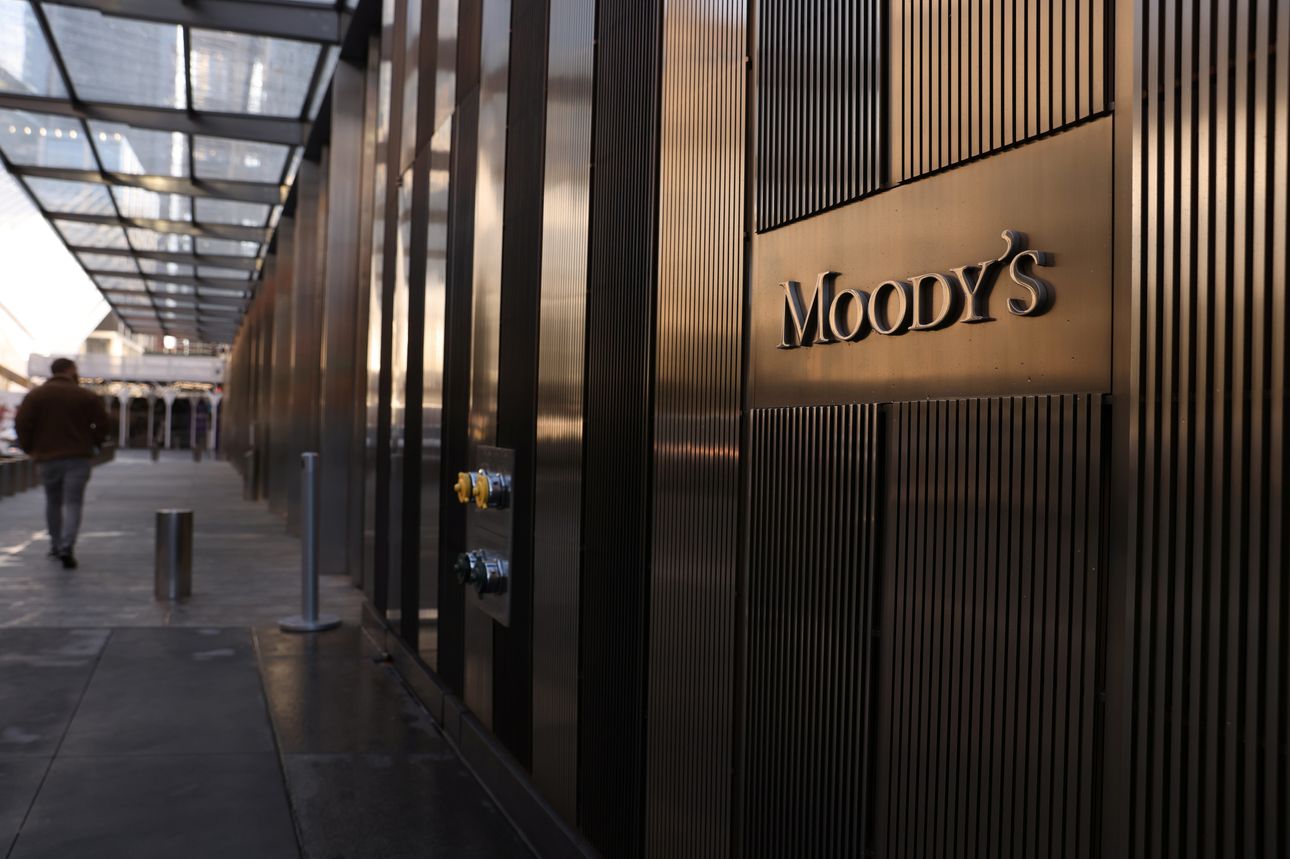 According the Wall Street Journal, “Businesses are reducing office space, scaling back on consulting and opting for cheaper packaging of goods as they look to stay ahead of the downturn.
Although companies already were leaning more on cost savings to combat higher inflation, the threat of a recession has prompted a harder look at the finances for some firms.”
You can read more of of what they have to say, here.
Schooley Mitchell helps businesses reduce operational expenses and grow their bottom lines, keeping them strong even in the midst of economic hardships.